
Everett Ruess: Young Wilderness Explorer’s Disappearance Still Unsolved
In 1934, 20-year-old Everett vanished, leaving behind few yet troubling clues

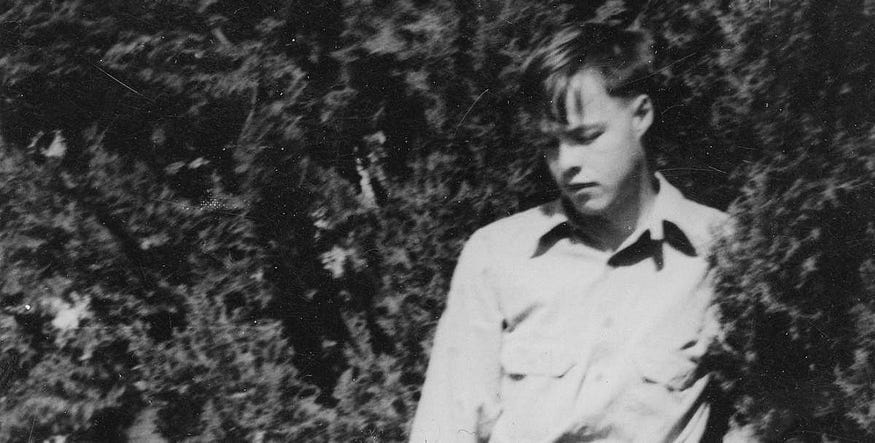
Wilderness Explorer Vanishes
Everett Ruess, 20, was last spotted near Utah’s Davis Gulch on November 20th, 1934. He set up camp and made a corral for his two donkeys, Chocolatero and Cockleburrs.
After this, his trail goes cold. Months later, his donkeys were discovered, still in their corral, but there was no sign of Everett.
Remnants of what was presumed to be his final campsite were found, but most of his belongings—including his money, art supplies, diary, paintings, and camping gear—vanished with him.
Any number of things can go wrong when one is out in the wilderness, especially alone. Yet no evidence that Everett had suffered an accident turned up. From the findings of the initial search and investigation to unsubstantiated rumors to details from Everett’s past correspondence and diaries, various theories would be born.
However, nearly a century later, the question remains: What happened to Everett Ruess?
Everett Ruess
The second of two sons, Everett Ruess was born on March 28th, 1914, to parents Christopher and Stella. A Harvard graduate, Christopher had worked variously as a director of education and research, in sales management, and as a Unitarian minister.
Christopher’s deep fascination with philosophy and literature is something that he would impart to his youngest son. Stella, who possessed an avid interest in writing and art, would heavily influence Everett’s love of both.
The Ruess family was a creative one and enjoyed documenting their thoughts and feelings, as well as their observations about the world around them. All four of them, including Everett’s older brother Waldo, were diarists and frequently shared passages from their journals with each other.
Everett, who was named after author and historian Edward Everett Hale, lived with his family in Brookline, Massachusetts. However, when he was nine, he and his mother moved out to Los Angeles temporarily to care for his ailing grandfather.
During their journey across the country, the two visited places like Yosemite Valley and the Grand Canyon, and it appears that Everett’s passion for traveling began here.
He excelled in school, going on to win a poetry award, as well as becoming the secretary-treasurer of the literary club and the vice president of the civics club. His parents wanted him to attend college, but he had no interest in doing so.
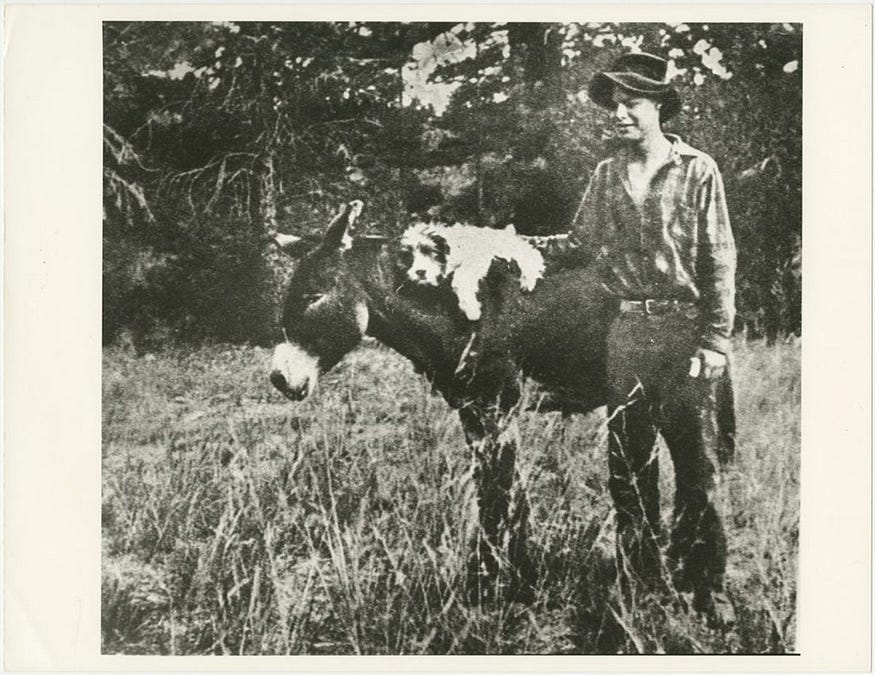
Solo Journeys
Seemingly driven by his innate desire for solitude and love of natural beauty, Everett began his periodic solo travels in 1930, at the age of 16.
During these trips, he would make his way to places like the Sierra Nevada, Yosemite and Sequoia National Parks, the Colorado Plateau, and various remote locations in Arizona, California, Utah, New Mexico, and Colorado.
He sought out Anasazi dwellings (keeping some of the artifacts he found there), painted nature scenes, took photographs, hitchhiked, camped and went hiking.
Everett’s parents were his main source of financial support, but he was occasionally able to sell one of his watercolor paintings or block prints. He was always accompanied by pack animals—either donkeys or horses.
Everett’s writings indicated that he felt misunderstood, suffered from bouts of dark moods, and was highly sensitive. Though he often felt elated as well, channeling his awe at the landscapes he witnessed during his travels into his poetry, letters and diary entries.
“Much of the time I feel so exuberant I can hardly contain myself. The colors are so glorious, the forests so magnificent, the mountains so splendid, and the streams so utterly, wildly, tumultuously effervescently joyful that to me, at least, the world is a riot of sensual delight.”
He encountered many people along the way, befriending some of them, but a certain shyness and his inherently solitary nature kept him from forming deep connections with most of them. However, he learned how to speak Navajo and spent time on reservations, where he adopted a brown and white puppy named Curly in 1931.
Quest for Fulfillment
Everett was gone for months at a time during his solo trips, but eventually came back and began attending UCLA, mainly to appease his father. For his part, he found college life uncomfortable and spent only five months there.
In his spare time, he sought out and befriended famed photographers and artists, like Ansel Adams, Dorothea Lange, Maynard Dixon, and Edward Weston.
But, as always, Everett never stayed in one place for long. A more conventional lifestyle left him feeling lost and unfulfilled, yet even in the wilderness—where he was ostensibly at his happiest—he had moments of despair.
“Everett’s real search was for his own identity and fulfillment,” W.L. Rusho noted simply in his book, Everett Ruess: A Vagabond for Beauty.
In a letter to his brother Waldo in 1931, he alluded to having been suicidal the previous year, during one of his solo journeys.
“Whatever I have suffered in the months past has been nothing compared with the beauty in which I have steeped my soul, so to speak. It has been a priceless experience—and I am glad it is not over. What I would have missed if I had ended everything last summer!”
Although it was his preferred lifestyle, living in the wild could be difficult—and even dangerous.
On September 8th, 1933, Everett, already covered in poison oak blisters, was stung repeatedly by bees. While attempting to escape them, he fell into Goddard Creek and, struggling to get out due to pain and exhaustion, almost drowned.
Disappearance
In late 1934, things appeared to be going well for him, as he indicated in letters to his family. Interestingly, he also alluded to having come into quite a bit of money recently, but didn’t elaborate on this. For the first time, he sent cash home to help his parents, explaining that he had “more money than I need.”
As Everett had always struggled to support himself, his sudden windfall was a mystery—and still is to this day. How much money did he have? And where did it come from?
By this time, he had two donkeys, Cockleburrs and Chocolatero. In November, he was in Utah and told his parents that they likely wouldn’t hear from him for a couple of months, since he wasn’t going to be near a post office for a while.
On November 20th, two sheepherders, Clayton Porter and Addlin Lay, encountered Everett on the Hole-in-the-Rock Trail, where they’d set up a campsite. They offered him food, but he declined, explaining that he had plenty. They watched as Everett and his donkeys walked away in the direction of Davis Gulch.
This is regarded as the last confirmed sighting of Everett Ruess.
In late January, after months with no word from their son, Christopher and Stella were becoming concerned. They started writing to anyone they could think of, including radio stations, sheriffs, newspapers, traders, Indian agents, and postmasters in the towns that Everett was known to have visited.
No one had seen him or had any idea where he might be.
The Search for Everett Ruess
Finally, on March 1st, 1935, a search party was formed. Led by H. Jennings Allen, a group made up of around a dozen local men set out to find Everett. Chocolatero and Cockleburrs were located in Davis Gulch on March 6th, in a corral presumed to have been made by Everett.
However, there were wildly differing accounts as to the condition of the animals, with some searchers stating that they were “thin and emaciated,” while others claimed that the donkeys were “fat and healthy.” Such discrepancies made it difficult to estimate how long they’d been there unattended.
Nearby, in a natural alcove, they discovered what they believed to be the missing poet’s final campsite.
Inside, there were candy wrappers, footprints, Anasazi potsherds, empty cans and impressions from a bedroll on the dirt floor. Notably absent from the site were Everett’s money, paintings, camping gear, cooking equipment, 1934 journal, and art supplies.
If he’d intended to move on, why would he leave his pack animals behind? Yet if he’d only gone out for a day hike, why would he bring everything else with him? These questions remain unanswered.
Additionally, the men found two spots in Davis Gulch where “Nemo 1934” had been etched into the rock. “Nemo,” Latin for “nobody,” was a pseudonym that Everett was known to have adopted and so it was assumed that he’d made the inscriptions himself.
Both etchings are underwater today and have been since 1957, when the waters of Lake Powell rose during the construction of Glen Canyon Dam.
Beyond these clues, no further hint of Everett’s fate was found.
Theories
It has been speculated that Everett might have ended his own life, since he was known to have been suicidal during at least one period in his past and that he had spells of deep sadness.
Conversely, a persistent rumor in nearby Escalante was that he had been robbed and murdered.
Cattle rustling had become a serious issue, so much so that the Cattlemen’s Association had spread a false rumor that an undercover investigator had been dispatched to the area. Everett reportedly arrived in the town shortly thereafter. Had he been mistaken for a government agent and pursued?
In a similar vein, another individual would suggest murder as the explanation for Everett’s disappearance. Aneth Nez, a Navajo man, shared a story with his granddaughter in 1971. In it, he claimed to have witnessed two Ute Indians chasing a young white man near Comb Ridge in the mid-1930s.
According to Nez, they robbed and killed him. Fearing what might happen to the Native Americans in his community if word got out that a white man had been murdered, Nez buried the young man and told no one of what he’d seen. Decades later, he was still haunted by his actions, which inspired him to finally confide in his granddaughter.
In what seemed like the most promising development in the case so far, remains were located years later in the same area. Initially, investigators believed that Everett had finally been found, but DNA testing in 2009 would conclude that the bones did not belong to the missing wilderness explorer and instead likely belonged to a Native American.
In a separate incident, tourists in the 1970s discovered bones wedged in a crack in Davis Gulch. They retrieved them and turned them in to a National Park Service ranger, who gave them to his supervisor.
It was determined that the person to whom the bones belonged had suffered a broken hip and a fractured collar bone. However, the skeleton inexplicably went missing and has never been located, making further examination impossible.
Another theory was that Everett Ruess might have simply been the victim of a tragic accident somewhere in the desert and succumbed to the elements. Could he have fallen into the Escalante River, taking his belongings with him?
Ultimately, no concrete evidence has been found to prove the veracity of any of these theories.
Other Developments
Everett’s family never gave up on looking for him. Sadly, though, his parents and brother have since passed away.
His case remains at a standstill, lacking any solid leads or evidence. To this day, neither Everett Ruess, nor any of his missing belongings, have ever been recovered.
“I have known too much of the depths of life, and I would prefer anything to an anticlimax,” wrote Everett in one of his final letters.
Similar Cases
Tom Messick: Man Vanishes in the Adirondacks
Garrett Bardsley: Utah Boy Scout Vanishes Without a Trace
Barbara Bolick: Gone Without a Trace
Sources
Everett Ruess: His Short Life, Mysterious Death, and Astonishing Afterlife by Philip L. Fradkin
Finding Everett Ruess by David Roberts
Everett Ruess: A Vagabond for Beauty by W.L. Rusho
Timeless, we appreciate you sharing this very interesting article. Please continue your excellent work, Michelle Short.